







2024.04.23
The Manifestation of Guan Yin
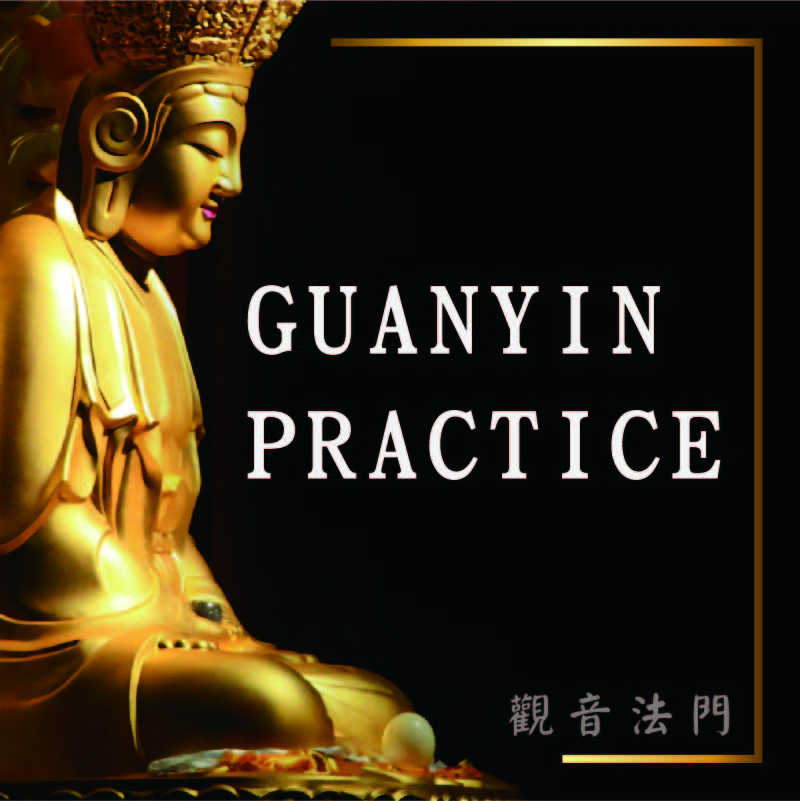
 The Great Compassion Mantra (Long Dharani) embodies compassion and bodhicitta. Bodhicitta is the aspiration for buddhahood, the mind that awakens oneself and awakens others. This mind is the very essence of the Great Compassion Mantra. As its name indicates, the Great Compassion Mantra calls upon us to engender the aspiration to free sentient beings from suffering and bring them ultimate happiness. Why is Guan Yin (Avalokiteshvara) able to uninterruptedly liberate sentient beings in this way? It is because of the power of the bodhisattva’s great compassionate vows. In order to enable sentient beings to attain buddhahood, Guan Yin has worked life after life to relieve beings from suffering and adversity. This is the bodhisattva’s enlightened activity: relieving suffering and rescuing beings from hardship. From the time of his attainment of buddhahood until now, Guan Yin has continued this work incessantly. The power of Guan Yin comes from aspirations and engendering the mind of bodhicitta. Therefore, we too must aspire and give rise to bodhicitta. Only when we generate such an aspiration and make such vows can our recitation of the Great Compassion Mantra give rise to a resonance and become efficacious.
Why does Guan Yin have a thousand hands and a thousand eyes? It is because we ourselves are Guan Yin’s thousand hands and thousand eyes. As long as each of us makes the aspiration to uphold and recite the Great Compassion Mantra, the power of great compassion will manifest. We become manifestations of Guan Yin. In our daily lives, we should serve as volunteers of Guan Yin. As long as we are serving sentient beings and helping to extend Guan Yin’s compassion, we should undertake whatever tasks, great or small, are needed. Thus, we are all manifestations of Guan Yin. In every aspect of our daily lives, we should emulate Guan Yin. In this way, the power of great compassion within us will manifest.
 When we uphold and recite the mantra, we should do so with sincerity and single-pointed concentration. Do not enter retreat or begin reciting the mantra only to have all kinds of distractions and trivial matters arise. When reciting the Great Compassion Mantra, our body, speech, and mind should remain pure. Therefore, when undertaking a retreat focused on the Great Compassion Mantra, we should observe the sojong and spend these days living in the manner of monastics. If we can observe the Eight Precepts while upholding and reciting the Great Compassion Mantra, then after twenty-one days, we will certainly experience a profound resonance. Everyone should have confidence in the practice. When we made the aspiration to undertake a twenty-one-day retreat the other day, one practitioner dreamed that the sea was surging and boiling. This is mentioned in the Dharani Sutra of Great Compassion, which states that reciting the Great Compassion Mantra can cause the waters of the sea to boil, cause Mount Meru to tremble, and, even more importantly, enable all sentient beings to be freed from suffering. This mantra possesses inconceivable power. Therefore, whether we undertake a twenty-one-day, seven-day, or even three-day retreat devoted to the Great Compassion Mantra, we should recite it with purity of body, speech, and mind. If we can accomplish this, it is already a truly great undertaking.
 Today, as the world becomes increasingly unsettled, we have gathered together here to practice diligently and earnestly. We are grateful for the compassionate aspiration of Guan Yin, and we are also grateful to the Earth for giving us so much. Since we have no other way to heal the Earth, we can draw upon the power of Guan Yin and dedicate its merit toward the health and well-being of the Earth. The only way to restore the well-being of the Earth is to accumulate virtuous karma. When the minds of people transform, the state of the Earth will transform accordingly. In recent years, we have witnessed dramatic changes in weather and the continual occurrence of natural disasters and calamities. These are said to arise through the collective effects of the human mind. Yet why do we continually create conditions for negative experiences rather than cultivating the causes for positive ones? Therefore, through the power of our aspiration in upholding and reciting the Great Compassion Mantra, we accumulate and expand the force of compassion, dedicating it toward the health, peace, and well-being of the Earth.