


2026.07.06
The Water, Land, and Air Dharma Assembly
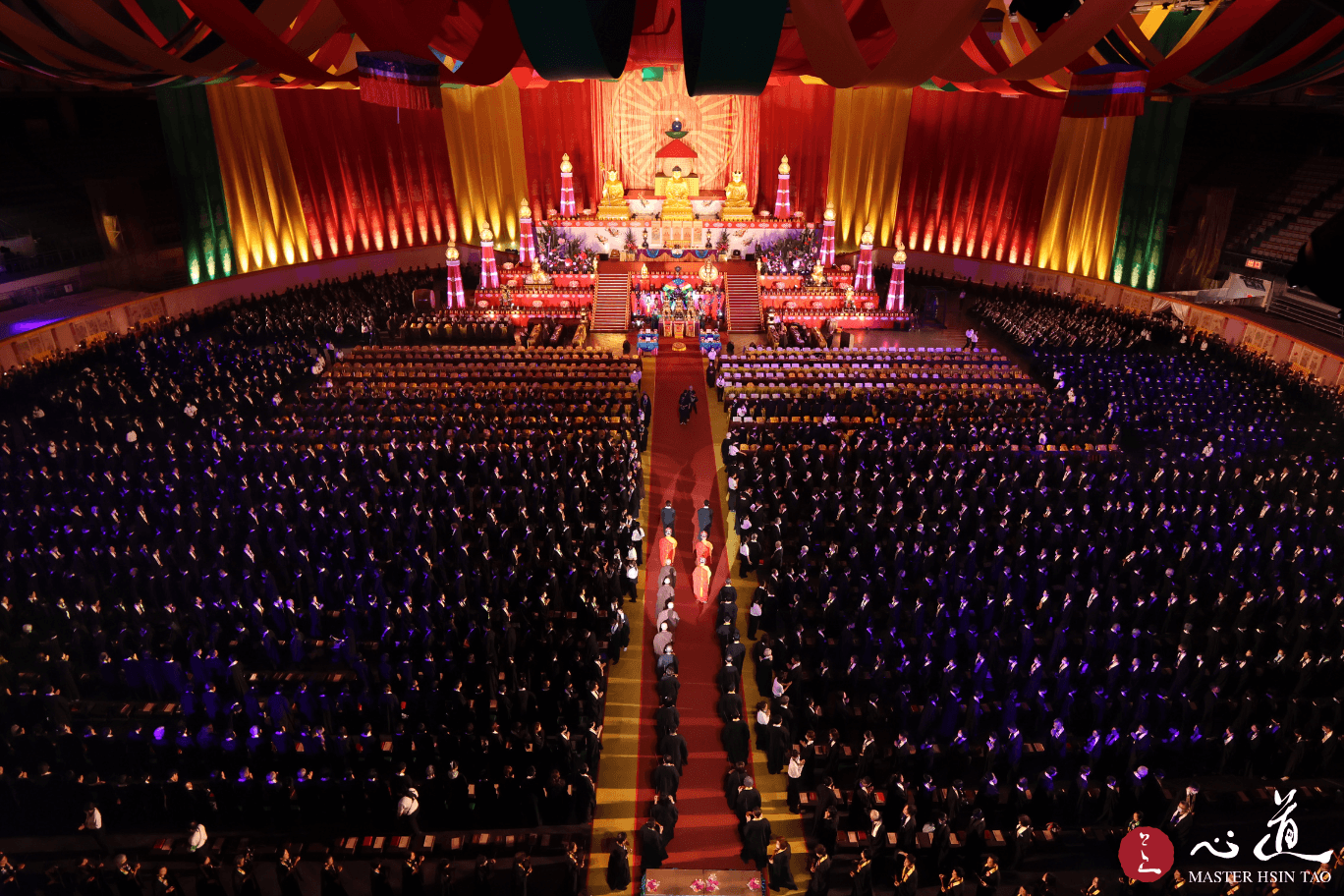 The origin of the Water, Land, and Air Dharma Assembly at Ling Jiou Mountain can be traced to Master Hsin Tao’s compassionate aspiration to liberate sentient beings, which arose during his diligent practice in a cemetery, and also reflects his concern with the concept of a spiritual ecology. The Water, Land, and Air Dharma Assembly is among the most solemn and elaborate liturgical observances in Chinese Buddhism. Its principal practices include the recitation of scriptures, contrition rituals, the exposition of precepts, ritual bathing, offerings to the monastic community, life release, and the feeding of hungry ghosts. It is a Buddhist rite intended to benefit both the living and the dead: for the living, it serves to dispel calamities and difficulties while increasing blessings and wisdom; for the deceased, it seeks to resolve karmic grievances and liberate them from karmic bonds, facilitating rebirth in Sukhavati. Master Hsin Tao has stated: “The Water and Land Dharma Assembly is about ‘making Dharma friends through the assembly,’ bringing sentient beings together in one place to make offerings of Dharma, food, and fearlessness, thereby enabling all sentient beings to transcend suffering, attain ultimate happiness, and become liberated from birth and death. To make offerings to all sentient beings is equivalent to making offerings to all Buddhas; one will ultimately attain Buddhahood oneself.”
During the eight-day, seven-night Water, Land, and Air Dharma Assembly, Ling Jiou Mountain follows traditional ritual and embraces the spirit of universal generosity, characterized by “compassionate vows, rigorous practice, and equanimitylity.” Sentient beings throughout the ten directions and realms are invited to gather at the Water, Land, and Air Dharma Assembly, where resentment accumulated over countless lifetimes may be resolved, thereby bringing about a profound reconciliation among all forms of life. At this auspicious assembly, participants not only engage collectively in ritual practices and contrition liturgies and share in their spiritual benefits, but also experience, within a purified environment, the Buddha’s boundless compassion and blessings. By immersing body and mind in the Dharma, practitioners purify their minds and transform consciousness into wisdom.
The assembly is thus not merely a ritual feast for the liberation of the deceased and the benefit of the living; it also serves as a practical embodiment of Master Hsin Tao’s vision of “spiritual ecology.” Through the assembly’s expansive compassionate vows, the opposition between human beings and nature is dissolved, allowing life to return to its fundamental state of interconnectedness, in which all beings may flourish together.